Africa leads global stablecoin adoption
Africa has established itself as the undisputed global leader in stablecoin usage. According to BVNK's Stablecoin Utility Report 2026, 79% of crypto-active users in Africa hold stablecoins, a rate significantly higher than any other region. This statistic underscores a fundamental shift in how digital assets are utilized on the continent, moving beyond speculative trading toward practical financial utility.
The demand for stablecoins is primarily driven by the continent's largest economies, particularly Nigeria and South Africa. A recent study by Reuters highlights that these nations are not only leading in adoption rates but also demonstrating the strongest growth in demand. Users in these markets are increasingly optimistic about the role of stablecoins in facilitating trade and managing currency volatility.
This widespread adoption is part of a broader global trend. The 2026 Stablecoin Momentum Report from ZeroHash indicates that stablecoins have crossed a critical threshold, transitioning from niche crypto-native experimentation into core financial infrastructure. With payment flows projected to reach $56.6 trillion by 2030, according to Bloomberg Intelligence, Africa's current engagement with stablecoins positions it at the forefront of this financial evolution.
USDC replaces cash for cross-border payments
The functional architecture of African trade is undergoing a structural shift. Traditional mobile money networks, while dominant for domestic consumer transactions, face friction when applied to cross-border commerce. The emergence of USD-backed stablecoins, particularly USDC, offers a direct solution to these inefficiencies. This transition is not merely technological but economic, driven by the need to mitigate local currency volatility and reduce the exorbitant costs associated with remittances and trade settlements.
Stablecoins provide a stable store of value and a faster settlement layer for businesses. Unlike traditional banking rails, which can take days to clear and involve multiple intermediary fees, stablecoin transactions settle in minutes with transparent, lower costs. This utility is critical in regions where local currencies fluctuate significantly, exposing traders to exchange rate risks. By using a USD-pegged asset, businesses can hedge against devaluation and maintain pricing stability.
The scale of this shift is substantial. Estimates from Bloomberg Intelligence suggest that stablecoin payment flows could reach $56.6 trillion by 2030, indicating a move from niche experimentation to core financial infrastructure. In Africa, the largest economies, including Nigeria and South Africa, are leading this demand growth, driven by a practical need for reliable cross-border payment rails.
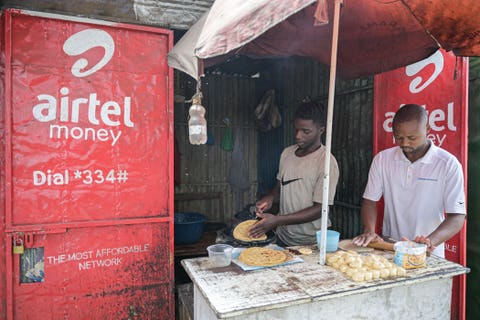
The following table compares the operational characteristics of traditional mobile money systems against USD-backed stablecoins for cross-border trade scenarios. This comparison highlights the structural advantages of stablecoins in mitigating volatility and reducing transaction friction.
| Feature | Traditional Mobile Money | USD-Backed Stablecoins |
|---|---|---|
| Settlement Time | 1-3 business days | Minutes |
| Currency Risk | High (local currency volatility) | Low (USD-pegged stability) |
| Transaction Cost | High (multiple intermediary fees) | Low (transparent, fixed fees) |
| Cross-Border Access | Limited (requires bilateral agreements) | Global (internet-based) |
| Regulatory Clarity | Established domestic frameworks | Evolving (regional variations) |
This functional shift suggests that stablecoins are not replacing mobile money for domestic consumer use but are instead filling a critical gap in the B2B and cross-border payment landscape. For traders and remittance senders, the ability to move value quickly and without currency exposure is becoming a standard requirement. As regulatory frameworks evolve, this utility is likely to drive further adoption across the continent's largest economies.
Regulatory frameworks take shape in 2026
Stablecoins are moving from crypto-native experimentation into core financial infrastructure, prompting African regulators to formalize oversight mechanisms. The 2026 Stablecoin Momentum Report from ZeroHash indicates that this shift has crossed a critical threshold, requiring jurisdictions to adapt legal structures to accommodate blockchain-backed payment rails.
Mauritius has emerged as a regional pioneer by issuing additional guidance on stablecoins and exploring the development of a comprehensive regulatory framework. This move signals a deliberate effort to create a predictable legal environment for digital asset issuers and users alike.
Mauritius is developing a comprehensive stablecoin framework to provide regulatory clarity for digital asset operations across the Indian Ocean region.
Nigeria is advancing through structured policy dialogue, highlighted by the Nigeria Stablecoin Summit 2026 (NSS 2.0). Scheduled for July 30, 2026, this gathering brings together policymakers and industry leaders to refine the country’s stance on digital currency usage and compliance.
On a broader scale, the African Institute for Financial Regulation (AIR) is collaborating with Global Digital to publish a Global Regulatory Playbook in early 2026. This initiative aims to standardize readiness across the continent, addressing the projected $56.6 trillion in stablecoin payment flows expected by 2030 according to Bloomberg Intelligence estimates. The playbook will serve as a foundational tool for harmonizing cross-border regulatory approaches.
Market growth signals and future outlook
Stablecoins have crossed a critical threshold, transitioning from crypto-native experimentation into core financial infrastructure. According to the 2026 Stablecoin Momentum Report, this shift is driven by the need for reliable, borderless payment rails that traditional banking systems often struggle to provide efficiently. In Africa, where currency volatility and cross-border friction remain persistent challenges, stablecoins offer a pragmatic solution for both individual users and institutional players.
The scale of this potential transformation is substantial. Bloomberg Intelligence estimates that stablecoin payment flows could reach $56.6 trillion by 2030. This projection positions blockchain-backed tokens as one of the largest payment rails in global finance, rivaling existing international transfer networks. For African markets, this represents not just a technological upgrade, but a fundamental restructuring of how value moves across borders.
This growth is already visible in regional adoption patterns. Africa’s largest economies are driving increased demand for stablecoins, with recent events like the Africa Stablecoin Summit bringing together bankers, regulators, and economic experts to discuss implementation frameworks. The focus is shifting from speculative trading to utility, particularly in remittances and trade finance.
Regulatory clarity remains the primary variable influencing this trajectory. While some jurisdictions are establishing comprehensive frameworks, others are still assessing the risks. The absence of direct XRP demand in current Ripple partnerships in Africa highlights that expansion benefits stablecoin businesses more directly than native token speculation. This distinction underscores the importance of focusing on regulatory compliance and infrastructure stability rather than asset price volatility.
Frequently Asked Questions About Stablecoins
What is the state of stablecoins in 2026?
Stablecoins have transitioned from niche crypto experimentation into core financial infrastructure, according to the 2026 Stablecoin Momentum Report. This shift is particularly evident in Africa, where stablecoin ownership among crypto-active users reached 79%, leading global markets. The largest economies, Nigeria and South Africa, are driving the strongest growth in demand as these tokens become essential for cross-border payments and financial inclusion.
Is XRP actively used for payments in Africa?
While Ripple has expanded its partnerships across the continent, none of its current African collaborations utilize On-Demand Liquidity (ODL) with XRP. Consequently, this expansion primarily supports Ripple’s stablecoin business operations rather than creating direct demand for XRP. The focus remains on leveraging stablecoins for settlement efficiency while XRP serves as a liquidity bridge in other global corridors.
How large is the stablecoin market projected to be by 2030?
Estimates from Bloomberg Intelligence suggest that stablecoin payment flows could reach $56.6 trillion by 2030. This trajectory positions blockchain-backed tokens as one of the largest payment rails in global finance. For African markets, this growth underscores the potential for stablecoins to integrate deeply into regional trade and remittance systems, provided regulatory frameworks continue to mature.
Helpful gear
Use these product recommendations as a starting point, then choose the size, material, and price point that fit how you actually use the gear.


As an Amazon Associate, we may earn from qualifying purchases.
No comments yet. Be the first to share your thoughts!